
Interior Design and AI: How Best to Use It with Your Designer
Wondering how AI fits into the world of interior design? With so many tools offering instant layouts and colour schemes, it’s tempting to think they can do it all. But that is where the first mistakes are made!
AI is a brilliant tool for inspiration, but like any tool, it works best when paired with human experience. That’s where your designer comes in to translate those early ideas into something practical, liveable and tailored to your home.
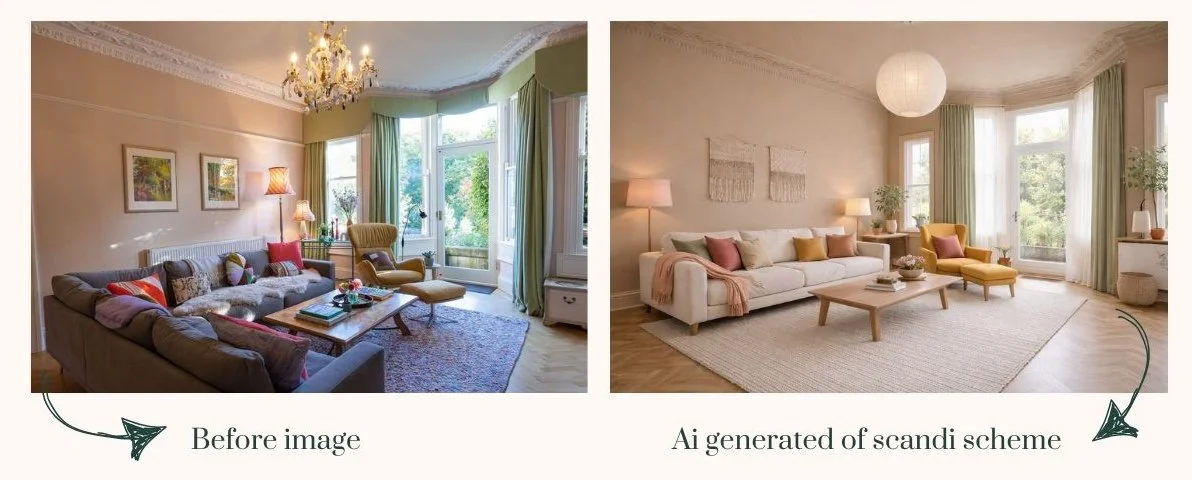

AI as an Inspirational Starting Point
When clients come to me with AI-generated images, mood boards or colour palettes, it’s often really helpful. These visuals give a quick sense of what they’re drawn to and the direction they’d like to explore. It helps us get aligned early on, which can be invaluable.
That said, it’s not perfect. AI might suggest furniture that doesn’t exist, layouts that ignore architectural constraints, or materials that simply don’t suit the brief. It doesn’t account for budget, how things feel in person, or whether a sofa can even fit through the front door.
That’s why I suggest using AI for inspiration, not as a final solution. It can give shape to your ideas and help rule out what doesn’t feel right.
There are plenty of AI tools that let you upload a photo of your space and play with colours, styles and materials. These can be a fun and accessible way to explore, but they’re only the start of the design journey.
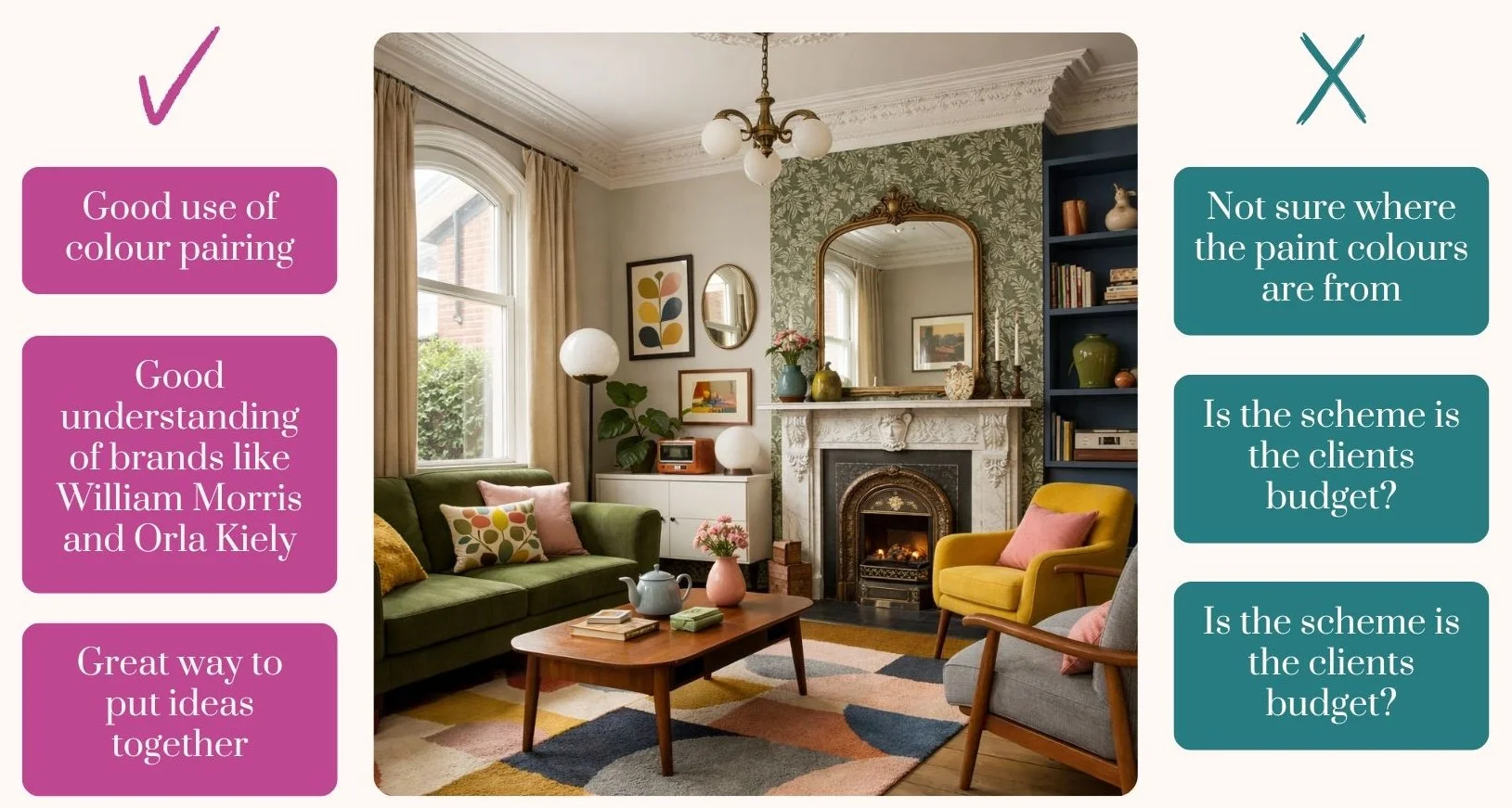
Pros and cons of using AI
We asked ChatGPT to generate a room scheme for our client suggesting what style, colours and brands she likes and here’s what it produced.

Why Human Designers Still Matter
AI isn’t going anywhere, but neither is the need for human designers.
We handle the realities AI can’t: from talking to suppliers and specifying finishes, to solving problems on site and making sure everything not only fits but flows. We think about how a space feels, not just how it looks.
Designers bring in:
• An understanding of your personal needs and history
• Ways to maximise light, flow and proportion
• Practical solutions that balance aesthetics with daily life
• Knowledge of what can be reused, restored or rethought
• The ability to challenge ideas and push creativity further
AI tends to agree with whatever it’s asked. As a designer, I’ll often ask, “Does this really work with your lifestyle?” or suggest alternatives like, “Have you considered this piece instead? I think it would be perfect for that space.” That’s the moment where original design really starts to happen.

One More Thing: Sustainability
It’s worth remembering that AI comes with an environmental cost. These systems use large amounts of energy and water to run, and not all of that water can be reused after cooling.
So while AI tools can be powerful, they’re best used with intention. Pairing them with thoughtful, human-led design makes the most of both worlds, creativity, functionality and a lighter footprint.
Thinking about your next project?
Bring your ideas and we’ll help turn them into something that works beautifully in real life.
